| Q. |
What are the advantages of automating my testing procedure? |
| A. |
Automation provides many advantage to all types manufacturers. Automation your test procedure can increase throughput and efficiency, allowing you to ship more product out the door in less time. Electrical safety testers with automation capability can be integrated into your previously existing testing apparatus, making upgrading equipment easier and more cost-effective. Automation allows you to record and store test results electronically, elimination the need for paper storage systems and allowing you to search and filter easily through your results.
|
| Q. |
Do you provide automation software? |
| A. |
Yes. Our Autoware software is a complete testing package that works in conjunction with many of our electrical safety testers. Autoware allows you to create, store, and load test file as well as capture and record test data and results.
|
| Q. |
What interfaces are available with your automated instruments? |
| A. |
Our instrument come standard with both a PLC (programmable logic control) interface as well as an RS-232 serial port. A GPIB port is available as a no-cost option. We also have available as an option, a Data/Interface card that provides internal memory and bar code scanning capability.
|
| Q. |
What are the advantages/disadvantages of GPIB, RS-232 and PLC control? |
| A. |
Programmable Logic Controllers use a series of relay contacts and have limited control capability. Depending on the model, PLC inputs and outputs for AR instruments can include: Test, Reset, Interlock, Memory 1/2/3, Test in Process, Pass, and Fail.
IEEE GPIB control offers many advantages. A GPIB interface is a parallel port, allowing you to attach and control up to 15 instruments onto a single GPIB bus at one time. Using GPIB commands, you can automatically control all of the instrument's operational parameters as well as receive all test parameters and results. You can also load and store test file information in the safety tester's memory. GPIB interfaces are high speed but limited in their functional distance - GPIB cables usually don't operate properly over long distances.
RS-232 serial control offers many advantages. Most modern PC's come standard with a built-in serial port, making an RS-232 interface easy to set up. Using RS-232 commands, you can automatically control all of the instrument's operational parameters as well as receive all test parameters and results. You can also load and store test file information in the safety tester's memory. RS-232 interfaces are considered low speed but they can function over long distances, allowing you to position your PC a good distance away from your test area.
|
| Q. |
What does the Data/Interface card do? |
| A. |
The Data/Interface card is an interface option that provides an internal memory, allows for data collection and includes bar code scanning capability. The card also includes a serial interface that can be configured for RS-232 or RS-485 communication. It comes complete with a 256 MB memory stick for downloading internal data.
|
| Q. |
Do you offer instruments capable of performing multiple safety tests? |
| A. |
Yes. AR offers several product families capable of performing different types of electrical safety tests.
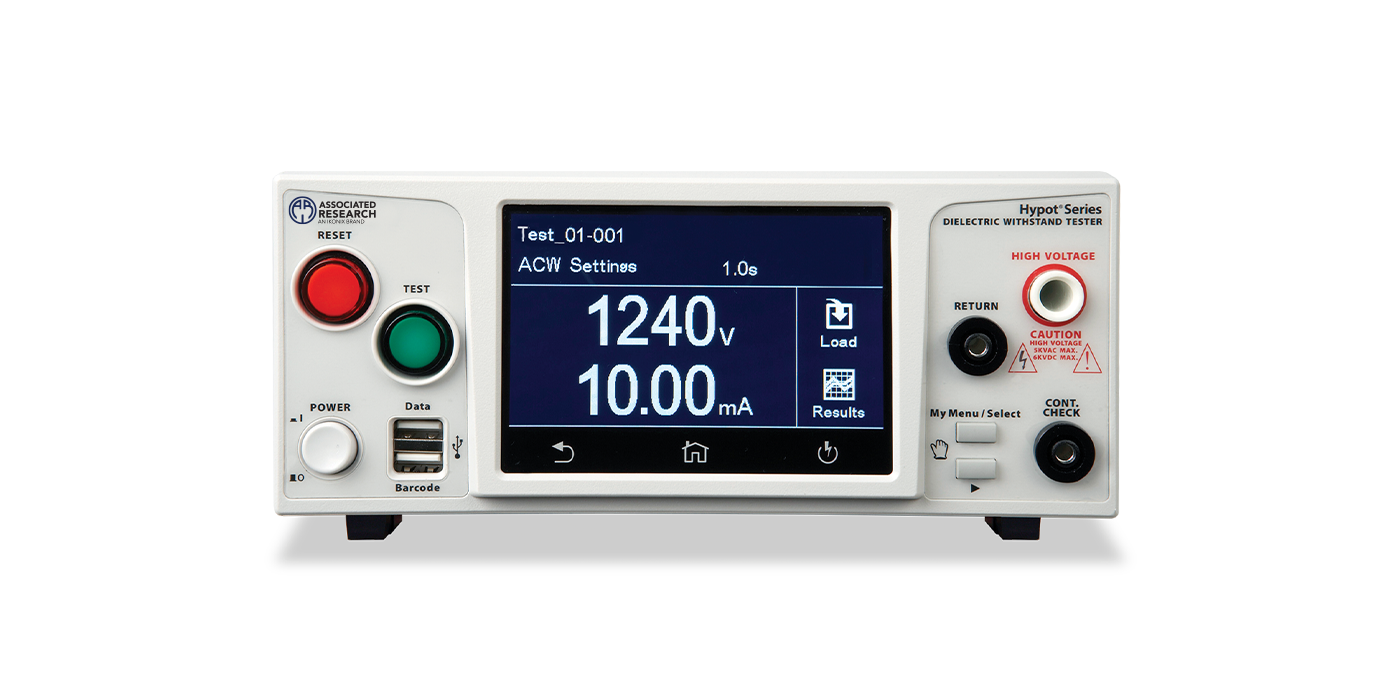
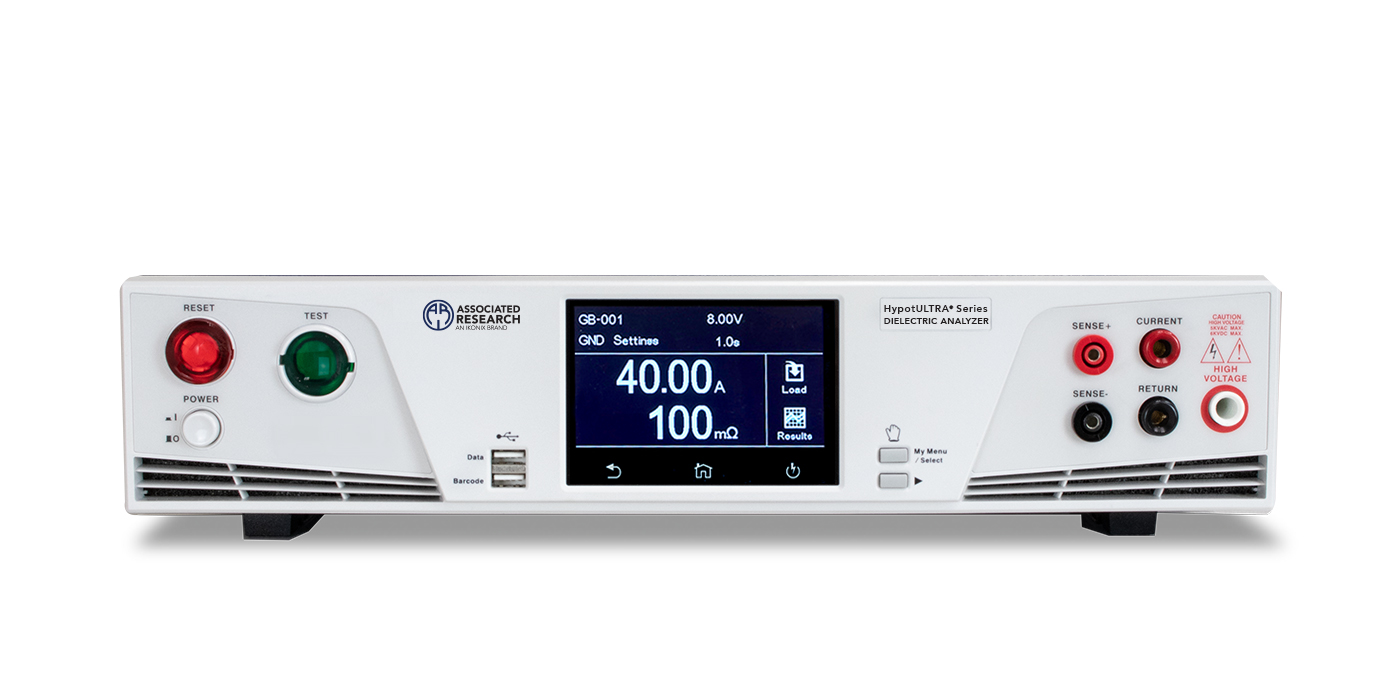
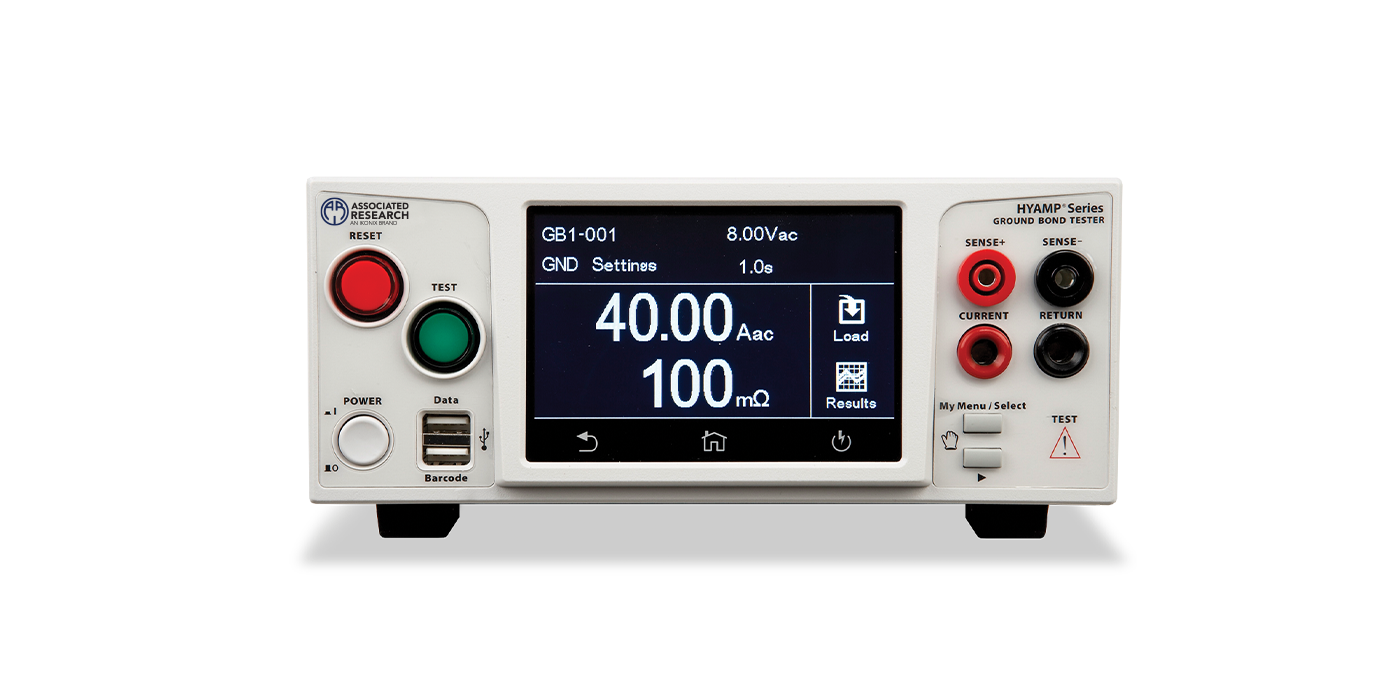
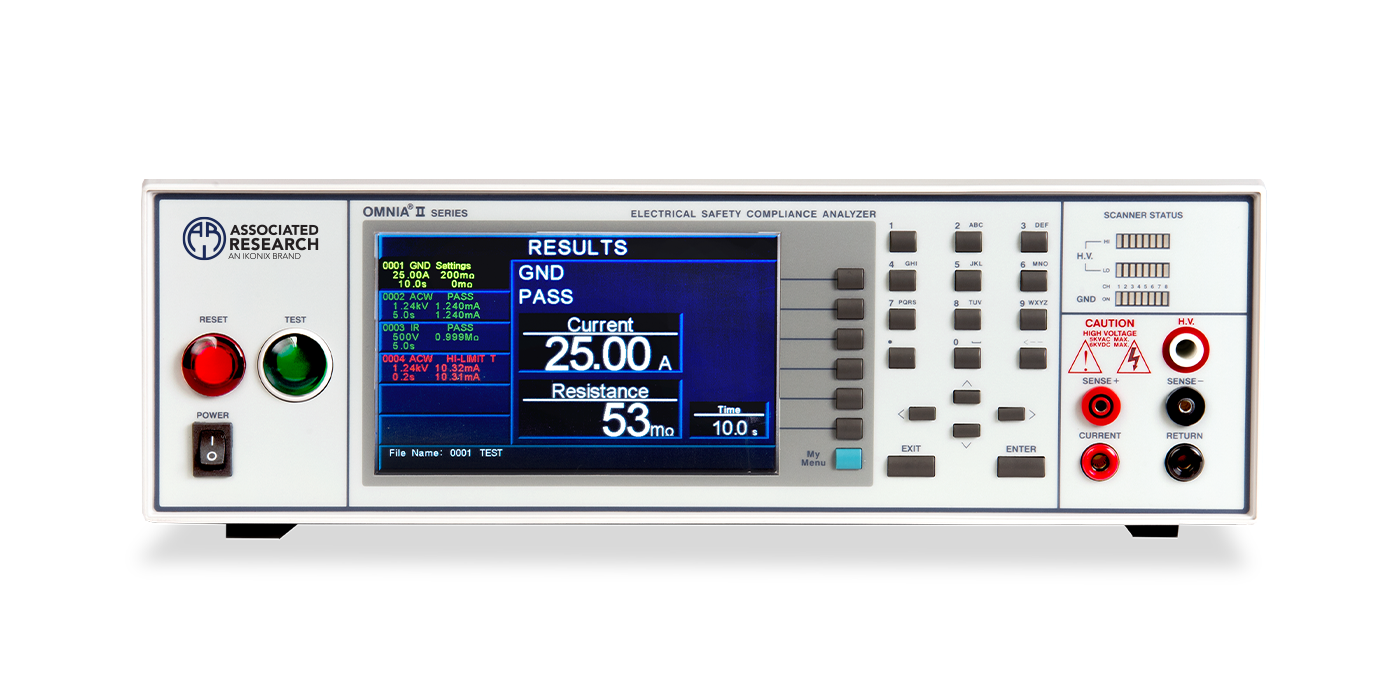
Our Hypot III family, HypotULTRA III family, and OMNIA 8100 series family all are capable of performing multiple safety tests with varying degrees of automation.
|
| Q. |
Can I test multiple products at once with your instruments? |
| A. |
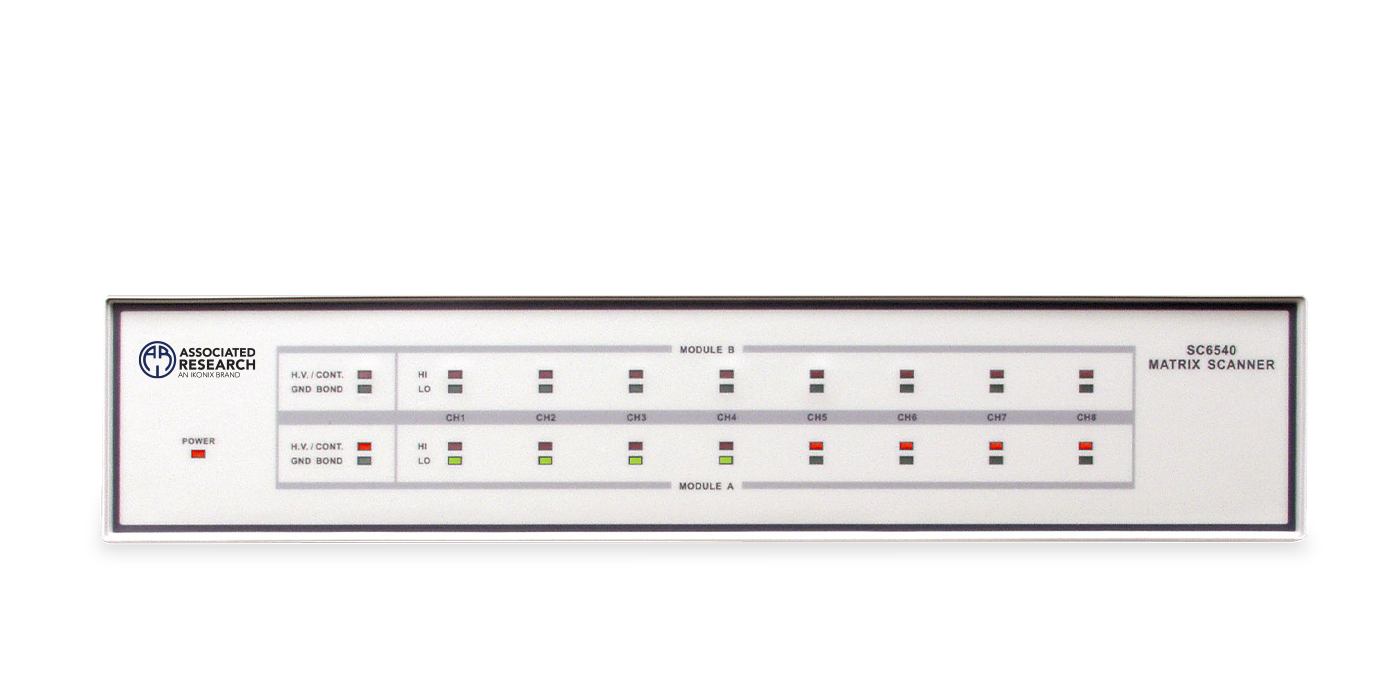
Yes. AR offers several solutions for customers looking to test multiple products or test points. Our HypotULTRA III and OMNIA 8100 families of multi-function instruments are available with an internal scanner which allows customers to perform sequential and simultaneous testing. With the addition of an 8-channel external slave scanner customers can
test up to 16 points or products at one time. These scanners can be controlled through the front panel of the AR testing instrument, allowing for easy operation and test set up. If more channels are needed, our SC6540 modular scanning matrix allows the operator to test an almost unlimited number of points. The SC6540 modular scanner is controlled independently by a PC through its own GPIB or RS-232 interface. The modular design provides customers with the flexibility to choose the necessary number of channels to fit varying production line needs. From point-to-point Continuity testing to Hipot, Insulation Resistance and Ground Bond testing, AR has the equipment to suit your application.
|
| Q. |
How can I increase my testing through-put? |
| A. |
Testing through-put can be increased dramatically by automating your testing procedure. Contact our Sales department for more information on an automated safety tester that will fit your needs.
|
| Q. |
Can I write my own code to control your instruments? |
| A. |
Yes. Our instruments work with the IEEE 488.2 standard command list. Simply incorporate the commands into your programming language of choice for complete control of your AR instrument. We offer National Instruments LabVIEW drivers for download if you prefer to use LabVIEW to control the instrument.
|
| Q. |
Where can I obtain the latest release of your software drivers for use with National Instruments LabVIEW® software? |
| A. |
Our latest LabVIEW drivers are available for download on our website. Our instrument drivers are approved by National Instruments so you can also download most of our drivers from their site at www.ni.com.
|
| Q. |
Who do I contact if I have questions on the LabVIEW® program itself? |
| A. |
Contact National Instruments or visit their website at www.ni.com.
|